
APTT – Lab Manual Video
This step-by-step video clearly demonstrates the correct technique for the execution of the fundamental manual technique that constitutes the basis

Year: 2020
Language: Ukrainian
Author(s): Alok Srivastava et al on behalf of the WFH Guidelines for the Management of Hemophilia panelists and co-authors
Format: Document
The 3rd edition is available in: English, French, Spanish, Arabic, Russian
The 3rd edition has also been translated into the following languages, with permission from the WFH, by NMOs/Other Organizations: Georgian, Portuguese
The 2nd edition is available in: Simplified Chinese
The 2nd edition has also been translated into the following languages, with permission from the WFH, by NMOs: Azerbaijani, Polish, Traditional Chinese
This is not an official WFH translation. This resource has been translated with permission, and is shared here with their kind permission. Translating organizations are encouraged to have translations reviewed by local experts, the WFH is not responsible for the translation or for any errors or changes to content from the original English edition. Patient organizations interested in translating a WFH resource must first obtain permission from the WFH, available here.
This new edition of the World Federation of Hemophilia (WFH) guidelines for the management of hemophilia comes at an exciting time in the evolution of the diagnosis and treatment of this condition. Since the publication of the second edition in 2012, tremendous advances have been made in several aspects of the management of hemophilia. These include genetic assessment as well as therapy with many innovative therapeutic products including extended half-life factor VIII (FVIII) and factor IX (FIX) products, a bispecific antibody, and hemostasis rebalancing drugs now in clinical development. All of these allow for more effective hemostasis than was possible in the past. Laboratory monitoring of therapies is better defined and prophylaxis is accepted as the only way to change the natural history of bleeding. There are highly effective therapies for patients with inhibitors. Outcome assessment with validated clinimetric instruments is widely advocated and practiced. All these advances are reflected in this third edition of the WFH guidelines, with new chapters devoted to several of these topics along with a new chapter on principles of care that aims to provide a framework for development of a comprehensive healthcare system for hemophilia including advocacy and empowerment for people with hemophilia (PWH). The recommendations in this edition were all developed through a formal evidence-informed and consensus-based methodology involving multidisciplinary healthcare professionals (HCPs) and well-informed PWH. While directed primarily at HCPs, these guidelines should also be very useful for PWH as well as advocacy organizations.
This third edition of the WFH Guidelines for the Management of Hemophilia has been endorsed by the Asian-Pacific Society on Thrombosis and Hemostasis, European Haemophilia Consortium, and National Hemophilia Foundation (USA).

This step-by-step video clearly demonstrates the correct technique for the execution of the fundamental manual technique that constitutes the basis

This eLearning module presents Section 1 of the WFH Guidelines for the Management of Hemophilia: General Care and Management of

This eLearning module presents Section 5 of the WFH Guidelines for the Management of Hemophilia: Treatment of Specific Hemorrhages. Detailed

This eLearning module presents Section 3 of the WFH Guidelines for the Management of Hemophilia: Laboratory Diagnosis. Detailed illustrations, interactive
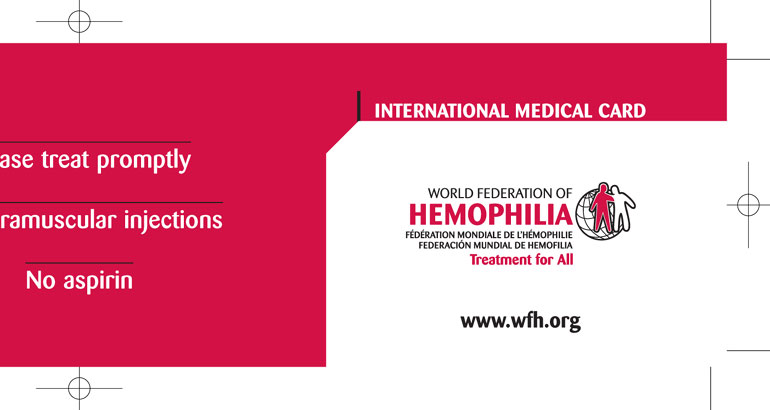
The World Federation of Hemophilia International Medical Card provides critical information to others in the case of an emergency.

This guide explains how a national procurement system of factor concentrates can help to ensure that people with bleeding disorders